Service
Crawl space encapsulation
Encapsulation turns a damp, vented crawl space into a closed, dry one. It is several jobs done in a set order, and most of the trouble people have with it comes from skipping one.
What you notice upstairs
A smell like a wet towel when the air conditioning starts. Hardwood boards that cup at the edges in summer and flatten in winter. Floors that feel cold and slightly sticky. Mildew in closets on outside walls. A power bill that climbs because the air conditioner is wringing water out of the house all day.
Much of the air on the ground floor has come up from below, so what the crawl space holds, the rooms above it share.
Why vents make it worse here
Foundation vents were meant to let a crawl space dry out. In a dry climate they do. In an Alabama summer the air coming in through them carries more water than the air already inside. It meets the cool underside of an air-conditioned floor, the ducts and the water pipes, and it condenses on them. The soil adds its own moisture from underneath.
So the space gets wetter with the vents open, not drier. Closing it off and drying the air is the reasoning behind every step below.
The steps, in the order they should happen
Deal with liquid water
If rain runs in or puddles form, that is fixed first with grading, a drain or a sump. A liner over standing water just hides a pond.
Clear the floor
Old plastic, fallen insulation, construction scraps and anything sharp come out so the liner lies flat and is not punctured.
Lay the liner
A heavy plastic sheet covers the soil, runs up the foundation walls and wraps each pier. Seams are overlapped and taped. The top edge is fastened and sealed to the wall.
Close the openings
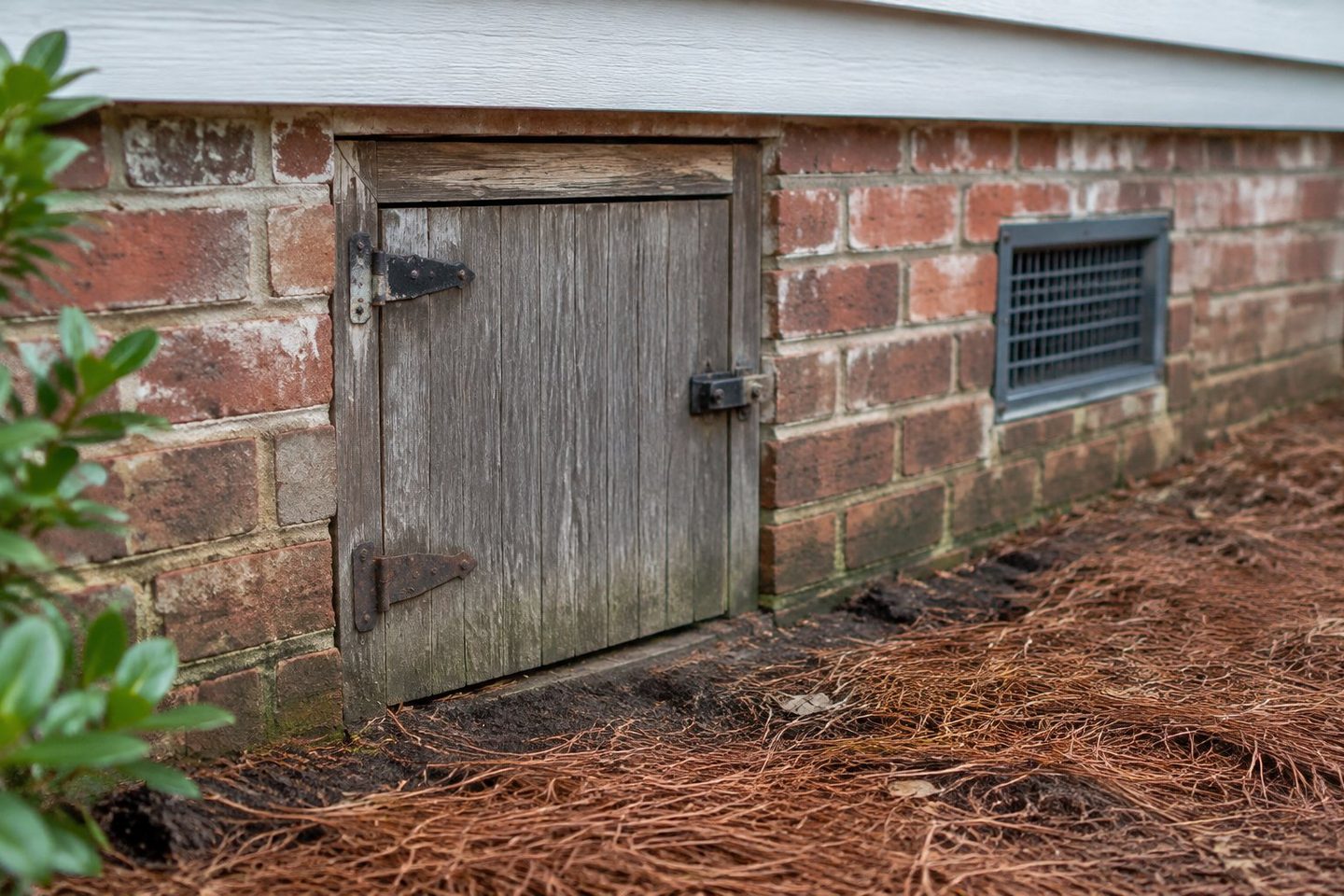
Vents are blocked and sealed from inside. The access door is replaced or weather-stripped. Gaps where pipes and wires pass through the walls are filled.
Dry the air
A dehumidifier made for crawl spaces is set on blocks and drained to the outside or to the sump. Some houses use a small supply of conditioned air from the ductwork instead.
Vapor barrier or encapsulation?
A vapor barrier
Plastic laid over the soil, often loose at the edges, with the vents left open. It cuts the moisture rising from the ground and nothing else. It is a real improvement over bare dirt and a fraction of the work.
Encapsulation
The liner is sealed to walls and piers, the vents are closed, and the air is dried by a machine. It controls the humid outdoor air as well as the ground. If the smell and the cupped floors are a summer problem, this is the one that addresses it.
Two things that get missed
Termite inspection. Pest control companies check the inside of a foundation wall for termite tubes, and a liner run right to the top hides them. The usual answer is a bare strip a few inches high below the sill. If you have a termite contract, ask the pest company what it requires before the liner goes up.
Gas appliances. A furnace or water heater in the crawl space that burns gas needs air to burn. Sealing the space changes where that air comes from. Raise it with the company; it may need a heating contractor's sign-off.
Ask the company
- How thick is the liner, is it reinforced, and what tape and fasteners hold it?
- How are the piers wrapped, and how is the top edge sealed to block or brick?
- What dries the air, where does its water drain, and who changes the filter?
- What happens to the insulation that is between the joists now?
- If there is mold on the wood, is cleaning it part of this price?
- Will you leave a termite inspection strip, and how wide?
Encapsulation questions
Will encapsulation fix floors that sag?
No. It stops wood from taking on more moisture. Joists and beams that have already softened or dropped need carpentry and support work first. See crawl space repair.
Does water get trapped under the liner?
Some ground moisture will always sit beneath it, and that is fine: the liner is there to keep it out of the air. What should not be under it is running water. That is why drainage comes first on the list.
Can I still store things down there?
Light storage on top of a reinforced liner is usually fine. Ask the company, and keep anything with sharp feet on a board.
Montgomery and nearby towns
Ready to have someone look at it?
Call and describe what you are seeing and when it happens. You will be put through to an independent local waterproofing company, and they arrange the visit with you.
Phone calls may be recorded. See the referral disclosure and the privacy policy.